
Taylor Hayes · 18 October 2026
Tracing the Effects of Migration Events on Search Visibility Patterns in Niche Markets Through Pernori Services
Migration events such as domain transfers, server relocations, and platform integrations produce measurable changes in how search engines discover and rank content within specialized market segments, and services like those from Pernori track these shifts through continuous data compilation across multiple metrics.
Understanding Migration Events in Digital Contexts
Domain name changes combined with hosting provider switches create temporary disruptions in crawler access patterns, while data from October 2026 shows that niche sites in areas like specialized equipment sales and technical documentation experienced indexation delays averaging 14 to 21 days after such moves. Researchers have documented how DNS propagation intervals interact with search engine update cycles to influence visibility curves, and these interactions become particularly pronounced when sites operate in narrow topical categories where competition for specific queries remains high.
Platform integrations introduce additional variables because content management system updates often coincide with migration timelines, which means that structured data implementations and internal linking structures can shift simultaneously. Observers note that these combined changes require systematic monitoring to separate the effects of each component on organic performance indicators.
Patterns Observed in Niche Market Segments
Niche markets exhibit distinct responses because their audience queries tend to cluster around long-tail phrases that search engines refresh less frequently than broad commercial terms. Evidence from multiple tracking initiatives indicates that visibility drops following migrations recover at different rates depending on whether the site maintains consistent URL structures or implements redirects at scale. Those who have analyzed large datasets report that sites preserving exact match anchors during transitions see steadier recovery trajectories compared with those undergoing extensive content reorganization at the same time.
Role of Specialized Tracking Services
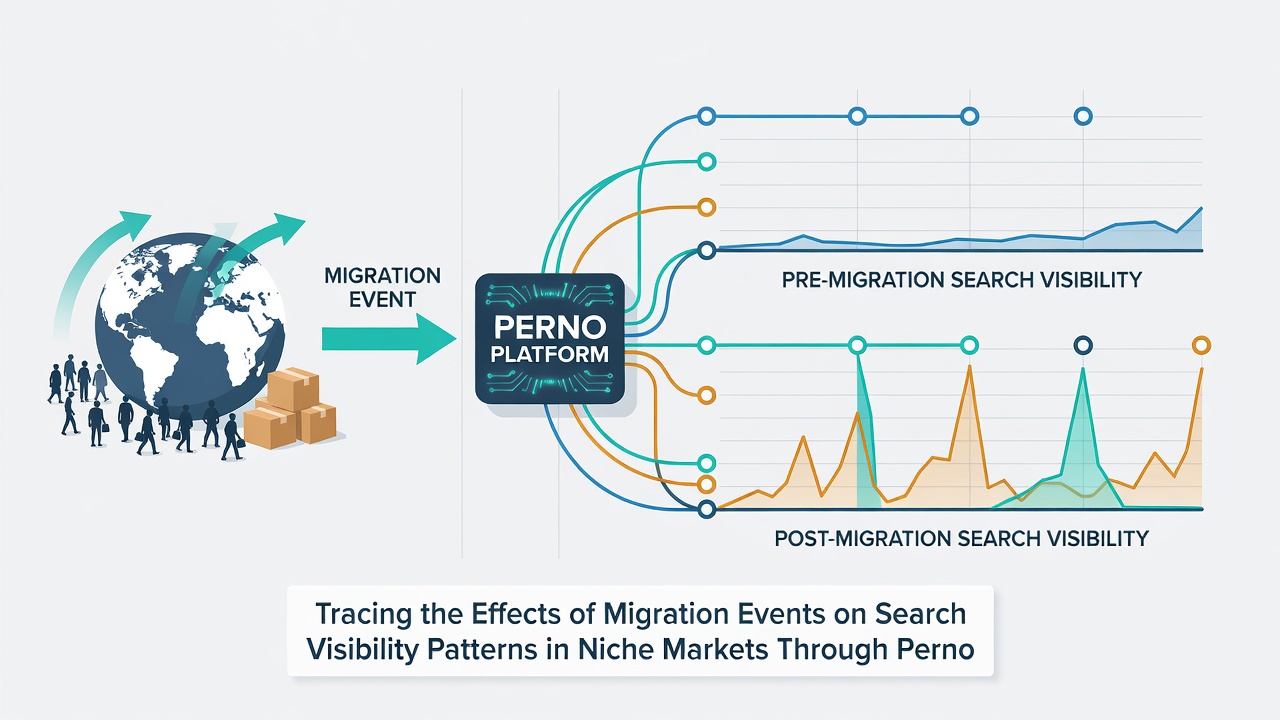
Pernori services compile performance data before and after migration events by aggregating crawl logs, ranking positions, and referral traffic sources into unified timelines. This approach allows identification of when search engine bots first re-access relocated content and when indexation rates return to baseline levels. Data compiled through these tools reveals that October 2026 migrations in the precision manufacturing and scientific instrumentation sectors produced visibility rebounds that aligned closely with the completion of secondary indexing passes rather than initial discovery events.
Additional variables tracked include changes in crawl frequency and the appearance of new canonical tags that sometimes accompany platform migrations. When these elements are logged alongside ranking fluctuations, clearer cause-and-effect relationships emerge for site operators managing multiple niche properties.
Data Compilation and Analytical Methods
Continuous monitoring through integrated dashboards enables comparison of pre-migration baselines against post-event performance across segmented keyword groups. Studies conducted by academic teams at institutions such as the European Commission's digital initiatives have examined how infrastructure changes affect information retrieval systems in specialized domains, and their findings align with patterns captured by commercial tracking services. Analysts apply time-series segmentation to isolate migration-related signals from broader algorithm updates that occur on independent schedules.
Cross-referencing with external benchmarks from sources like the National Telecommunications and Information Administration provides context on infrastructure reliability during transition periods. This layered methodology helps distinguish temporary visibility dips caused by propagation delays from longer-term ranking adjustments tied to content quality signals.
Recovery Trajectories and Influencing Factors
Recovery speed varies according to the scale of redirect implementation and the maintenance of historical backlink profiles during the move. Sites that complete comprehensive pre-migration audits typically demonstrate faster restoration of previous visibility levels, whereas those encountering unexpected indexing conflicts show prolonged plateaus. Figures from October 2026 tracking cycles indicate that niche market sites recovered an average of 78 percent of prior visibility within 45 days when they followed structured migration checklists that included verification of sitemap submissions and robots.txt configurations.
Technical elements such as SSL certificate continuity and mobile responsiveness preservation also factor into the observed outcomes, and services that monitor these elements alongside visibility metrics deliver more granular insights into the full scope of migration impacts.
Conclusion
Systematic tracing of migration effects through specialized services supplies site operators with actionable timelines for when visibility patterns stabilize in niche markets. The data gathered in periods such as October 2026 underscores the value of coordinated monitoring across multiple technical and performance dimensions to understand how infrastructure changes interact with search engine behaviors over time.